
Choosing a hyaluronic intensive serum looks simple until every bottle promises deep hydration, smoother lines, and a glass-like glow. The real decision depends on formula quality, skin needs, and daily use. A thick serum may feel comforting, yet texture alone does not prove performance. Your skin can disagree.
Board-certified dermatologist Dr. Hadley King explains, “Hyaluronic acid is a humectant, which means it attracts water.” That principle matters when comparing molecular weights, supporting ingredients, and packaging. A well-designed hyaluronic intensive product may combine different forms of hyaluronic acid, helping create hydration across the skin’s surface. However, no serum can replace a moisturizer, sunscreen, or careful patch testing.
This guide presents seven practical tips for choosing more confidently. It examines ingredient lists, concentration claims, skin compatibility, fragrance, packaging, application, and value. Look closely. A short ingredient list is not automatically better, and a premium price is not proof of superior results. Apply serum to slightly damp skin, then seal it with moisturizer when needed. That small step can change the feel.
The discussion also recognizes uncertainty. Individual results vary, especially with sensitive or very dry skin. Some products may pill under makeup. Others may feel sticky in humid weather. Those details are easy to overlook. Reliable choices come from transparent labeling, realistic claims, and consistent observation over time. Take notes for a week. Your skin may reveal more than the advertisement does.
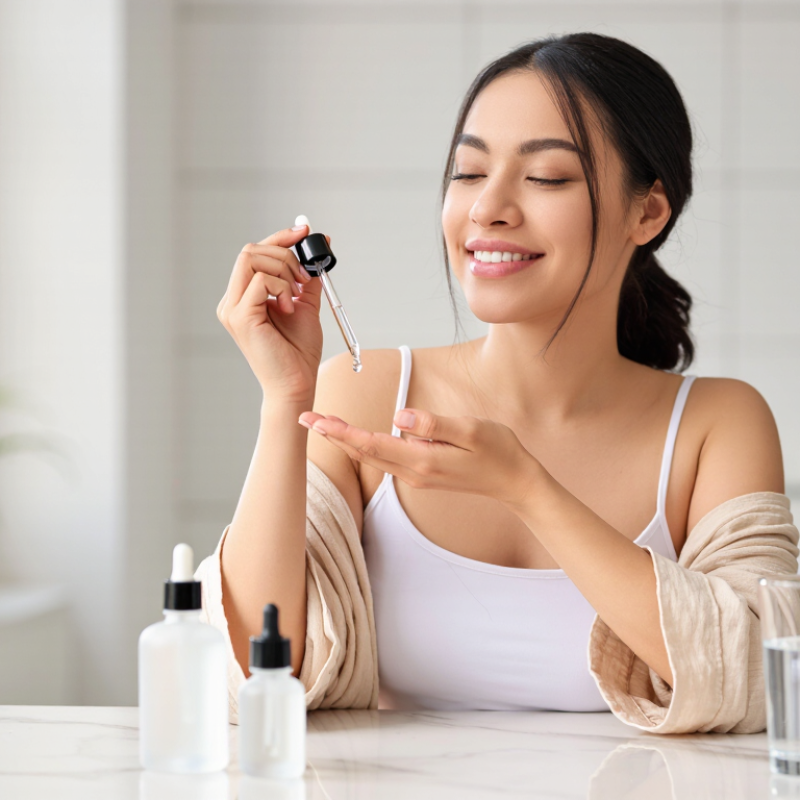
Hyaluronic intensive serum is a water-binding product, not a miracle treatment. Hyaluronic acid naturally exists in skin, joints, and connective tissue. On the skin, it attracts moisture and helps support a softer surface. A review in Clinical Medicine & Research reports that hyaluronic acid can hold up to 1,000 times its weight in water. The number sounds dramatic. It describes water-binding capacity, not guaranteed wrinkle removal.
Molecule size matters. Larger molecules usually form a temporary film on the surface. Smaller forms may reach upper skin layers, but they do not automatically penetrate deeply. A 2021 review in Dermatologic Therapy linked molecular weight with different hydration and barrier effects. Check the ingredient list, texture, and packaging. Choose a formula that feels comfortable after five minutes, not only at first contact. Apply it to slightly damp skin, then seal it with a moisturizer. Otherwise, dry air may leave the surface feeling tighter.
Look for evidence, not louder claims. The Cosmetic Ingredient Review’s safety assessment found hyaluronic acid safe in cosmetic use under established conditions. Still, skin can react to preservatives, fragrance, or multiple active ingredients. Patch testing remains sensible. My practical mistake was judging hydration by instant smoothness. That effect can be temporary. Better testing means comparing comfort, flaking, and tightness over two weeks, while keeping the rest of the routine stable.
Choosing an intensive hyaluronic serum starts with reading beyond the front label. Check whether the formula lists hyaluronic acid, sodium hyaluronate, or hydrolyzed hyaluronic acid. These forms can differ in size and skin feel. Smaller molecules may feel lighter, but evidence does not prove that “smaller” always works better. A 2021 review in Dermatologic Therapy found topical hyaluronic acid improved hydration and fine lines, yet results varied across formulations. The formula matters.
Look for glycerin, panthenol, or beta-glucan beside hyaluronic acid. They can support water retention. Do not judge quality by concentration alone. Ingredient order, texture, and clinical testing provide better clues. The Cosmetic Ingredient Review’s safety assessment reported hyaluronic acid as safe in cosmetic use when properly formulated. Still, fragrance and drying alcohol may irritate reactive skin. Patch-test near the jawline for two days. Small step.
Packaging deserves attention. An opaque, well-sealed pump can reduce contamination and repeated air exposure. Apply the serum to slightly damp skin, then use a moisturizer to reduce water loss. Without that layer, some people notice tightness, especially in dry weather. I once trusted a higher percentage and ignored the uncomfortable finish; that was a poor decision. Choose the formula your skin tolerates consistently. Consider texture, ingredient transparency, testing claims, and your climate before purchasing.
7 Tips for Choosing Hyaluronic Intensive Serum
Which Skin Types Benefit Most from Intensive Serum?
Dehydrated skin usually benefits most from a hyaluronic intensive serum. It may feel tight, look dull, or show fine lines after cleansing. Hyaluronic acid attracts water near the skin’s surface. Apply the serum to slightly damp skin, then seal it with a moisturizer. Otherwise, dry air may leave your skin feeling tighter. This detail is easy to overlook.
Dry and mature skin can also respond well to layered hydration. Look for a simple formula with several molecular weights of hyaluronic acid. Different sizes may support hydration at different surface levels. However, “intensive” is not a regulated skincare term. A stronger-sounding label does not guarantee better results. Check the full ingredient list instead.
Oily and combination skin may use these serums, too. Choose a lightweight, non-greasy texture and apply a small amount. Extra layers can feel sticky, especially in humid weather. Sensitive skin needs more caution. Fragrance, alcohol, or multiple active ingredients may cause discomfort. Patch test near the jaw before regular use. Stop if burning or persistent redness appears. Skin changes with seasons, stress, and medication, so one routine may not work forever. I would reassess after two weeks, rather than adding more product quickly. A dermatologist can help when dryness, scaling, or irritation continues.
| Tip | Selection Factor | What to Look For | Skin Types That May Benefit Most | Practical Use Guidance |
|---|---|---|---|---|
| 1 | Choose the right hyaluronic acid profile | Look for formulas using more than one molecular size or a clearly stated type of hyaluronic acid. Different forms can support hydration at different levels of the skin's surface. | Dry, dehydrated, normal, and combination skin | Ingredient names may include sodium hyaluronate or hydrolyzed hyaluronic acid. The ingredient list does not guarantee a specific depth of penetration. |
| 2 | Check the supporting ingredients | Helpful companions may include glycerin, panthenol, betaine, or ceramides. These ingredients can attract water or help reduce moisture loss. | Dry, sensitive, and barrier-impaired skin | A simple formula is often easier to tolerate, especially when the skin is reactive or recovering from over-exfoliation. |
| 3 | Consider the texture | Choose a lightweight gel or water-based serum for a non-greasy feel, or a richer emulsion when additional comfort and emollience are needed. | Oily and combination skin: lightweight gels Dry skin: richer serum-emulsions |
Texture affects comfort and routine adherence, but it does not by itself determine how effective hydration will be. |
| 4 | Prefer fragrance-free options for sensitive skin | Fragrance and essential oils are not required for hydration and may increase the chance of irritation in susceptible users. | Sensitive, rosacea-prone, or easily irritated skin | Patch-test a new product on a small area before applying it broadly. Stop use if burning, swelling, or persistent redness occurs. |
| 5 | Use it on slightly damp skin | Applying a humectant serum after cleansing, while the skin is still slightly damp, can help provide a comfortable hydration step. | All skin types, especially dehydrated skin | Follow with a moisturizer to help reduce transepidermal water loss. Applying a humectant alone may not be sufficient in dry climates. |
| 6 | Match the formula to your climate and routine | In dry or low-humidity conditions, pair the serum with a moisturizer. In humid weather, a lighter layer may feel more comfortable. | Dry and dehydrated skin in dry climates Oily and combination skin in humid climates |
Skin comfort can change with weather, indoor heating, air conditioning, and cleansing habits. |
| 7 | Evaluate the complete formula, not just the headline ingredient | Check the full ingredient list, packaging, preservation system, and claims. A hyaluronic serum should complement sunscreen, gentle cleansing, and moisturizer use. | All skin types | Hyaluronic acid mainly supports surface hydration; it is not a substitute for daily broad-spectrum sunscreen or treatment for a diagnosed skin condition. |
7 Tips for Choosing Hyaluronic Intensive Serum
How to Evaluate Ingredients, Texture, and Product Quality
The word “intensive” sounds impressive, but it is not a regulated measure of serum strength. Check the full ingredient list instead. Look for hyaluronic acid forms such as sodium hyaluronate or hydrolyzed hyaluronic acid. Different molecular sizes may support hydration across the skin’s surface. Glycerin and panthenol can also improve moisture retention. A short, clearly presented formula is often easier to assess. More ingredients do not automatically mean better results.
Texture matters during real use. Apply two drops to slightly damp skin, then observe the finish. A comfortable serum should spread easily without heavy residue or rapid pilling. People with oily skin may prefer a watery gel, while dry skin may enjoy a richer layer. I once chose a very sticky formula because it felt “powerful.” That shortcut was not wise. If it pills under sunscreen, it becomes difficult to use consistently. Comfort supports consistency.
Product quality requires careful inspection. Choose sealed packaging with a clear expiry date, batch information, and a reliable storage history. An opaque or airless container may help limit light and air exposure. Avoid products with an unusually strong scent or unclear labeling. Fragrance is not automatically harmful, yet sensitive skin may react to it. Patch test near the jawline before regular application. Stop if burning, swelling, or persistent redness appears. Personal experience can guide a choice, but it cannot replace careful evaluation.
How to evaluate ingredients, texture, and product quality using practical reference points.
Use this checklist when comparing products: a mildly acidic pH around 4.5–5.5 is generally compatible with the skin’s natural acid mantle; hyaluronic acid may appear in different molecular-weight ranges, from low molecular weight below 50 kDa to high molecular weight above 500 kDa. A well-designed formula should also provide supporting humectants, a comfortable non-sticky texture, clear ingredient labeling, suitable preservation, and reliable packaging.
Applying a hyaluronic intensive serum safely depends on timing, quantity, and your skin’s condition. The American Academy of Dermatology Association recommends applying moisturizer after washing, while skin remains slightly damp. This helps reduce water loss. A 2021 review in Clinical, Cosmetic and Investigational Dermatology reported improved hydration in topical hyaluronic acid studies, but noted small samples and varied formulas.
Tip 1: Cleanse gently. Avoid hot water and harsh scrubbing.
Tip 2: Apply two or three drops to damp skin, not dripping skin.
Tip 3: Press lightly with clean fingertips. Rubbing aggressively may increase irritation.
Tip 4: Seal the serum with a fragrance-free moisturizer within one minute. Serum alone can feel tight in dry air.
Tip 5: Patch test near the jawline for 24 hours. Stop if burning, swelling, or persistent redness appears.
Tip 6: Use sunscreen every morning, because hydration does not protect against ultraviolet exposure.
Tip 7: Introduce it once daily before increasing use. Sensitive skin may need less.
I sometimes apply too much, believing more serum means more hydration. It usually only feels sticky. Formula texture, climate, and barrier health matter. Avoid applying over cracked or actively inflamed skin without professional advice. Read the full ingredient list, since supporting ingredients can cause reactions even when hyaluronic acid is well tolerated.
“Intensive” is not a regulated strength measurement. Check the complete ingredient list instead. A higher percentage does not guarantee better hydration. Formula quality matters more.
Look for hyaluronic acid, sodium hyaluronate, or hydrolyzed hyaluronic acid. They can differ in molecule size and skin feel. Smaller molecules may feel lighter. They are not automatically better.
Dehydrated skin often benefits most. It may feel tight after cleansing or look dull. Dry and mature skin may also enjoy layered hydration. Oily skin can use a lightweight gel.
Apply two drops to slightly damp skin. Follow with moisturizer. This helps reduce water loss. Dry weather can otherwise increase tightness. Small step.
Glycerin, panthenol, and beta-glucan can support moisture retention. A short formula is easier to evaluate. More ingredients do not always create better results.
Choose a watery gel for oily or humid conditions. Dry skin may prefer a richer layer. The serum should spread easily without heavy residue. Texture matters. Avoid products that pill under sunscreen.
Patch-test near the jawline for two days. Fragrance, drying alcohol, and multiple active ingredients may cause discomfort. Stop if burning, swelling, or lasting redness appears. Be cautious.
Choose sealed packaging with expiry and batch information. Opaque or airless containers may reduce light and air exposure. Avoid unclear labels or unusually strong scents. Storage history still matters.
Yes, some people notice tightness without moisturizer. This can happen in dry air. I once chose a higher percentage and ignored its uncomfortable finish. That was poor judgment. Reassess after two weeks.
Choosing a hyaluronic intensive serum starts with understanding how hyaluronic acid attracts and holds water in the skin, helping improve hydration, softness, and the appearance of fine dryness lines. The right formula should match your skin’s needs and may combine different molecular weights to support moisture at multiple surface levels. Consider whether your skin is dry, dehydrated, sensitive, oily, or combination, and look for a lightweight, non-irritating texture that layers comfortably with other products.
When evaluating a serum, review the ingredient list for supportive hydrators, soothing components, and a suitable preservative system, while avoiding ingredients that cause personal sensitivity. Product quality also depends on stable packaging, clear labeling, and a texture that does not feel sticky or heavy. Apply the serum to slightly damp, clean skin, use a moderate amount, and follow with a moisturizer to help seal in hydration. Introduce it gradually if your skin is sensitive, and always follow the product’s directions for safe, effective use.
